Whole Spices or Ground? The Better Choice for Flavour and Freshness
By Admin
Open a jar of cumin and the first breath tells you a great deal. If the aroma rises immediately—warm, earthy and a little sharp—the spice still has life in it. If you have to search for the smell, much of its character has already slipped away.
That small kitchen moment sits behind a question we hear often: are whole spices always better than ground spices?
The honest answer is no. Whole and ground spices do different jobs. One protects flavour until the moment you need it; the other releases flavour quickly and spreads it evenly. Better cooking—and better buying—comes from knowing when each form earns its place.
Whole spices hold flavour. Ground spices deliver it fast. The right choice depends on when, where and how that flavour needs to arrive.
What actually changes when a spice is ground?
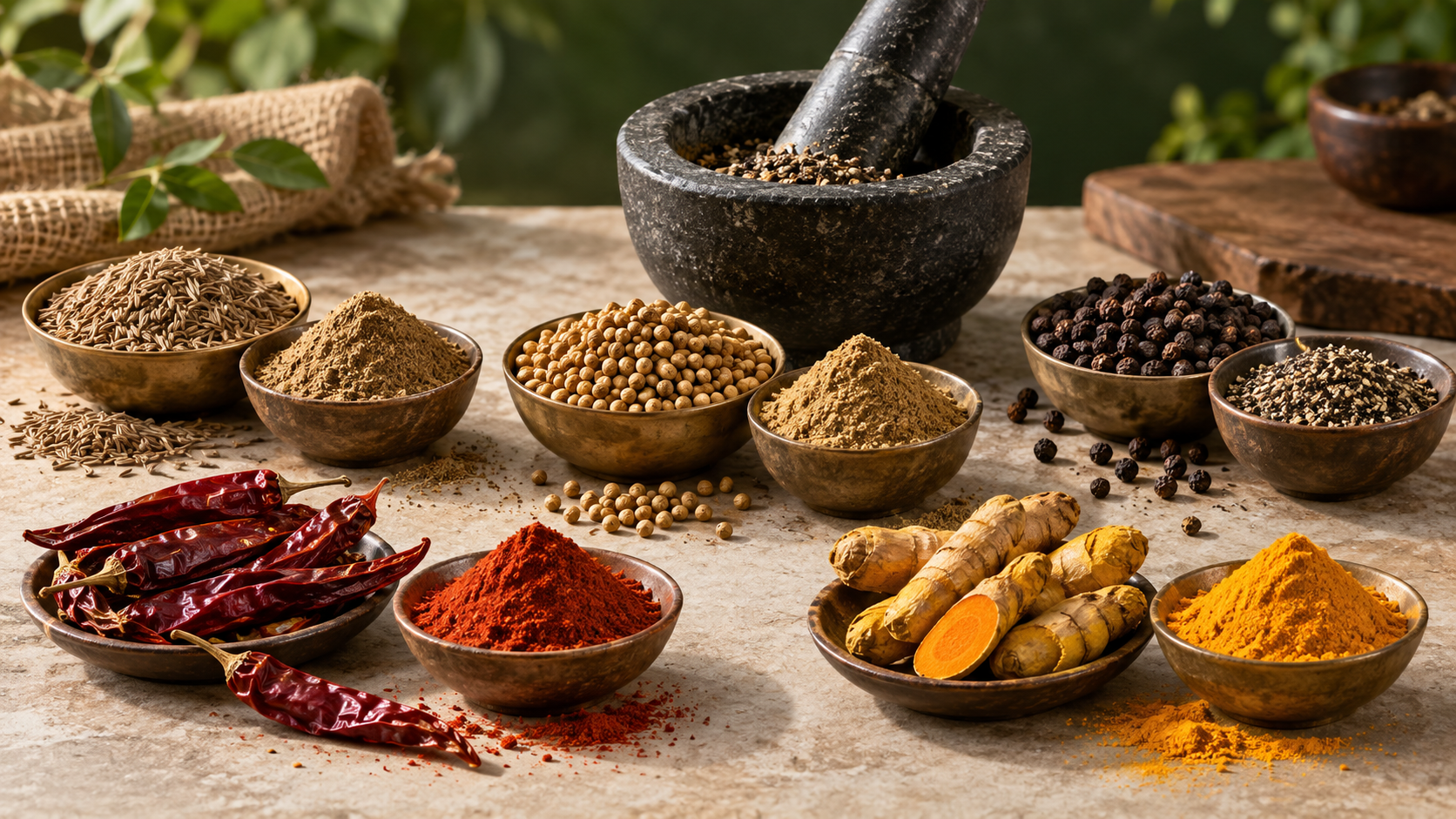
A whole cumin seed, coriander seed or peppercorn keeps much of its aromatic oil inside its natural structure. Crack or grind it and the surface area increases dramatically. That is why a freshly crushed spice smells so powerful: more of its aroma compounds are suddenly exposed.
The same exposure that gives an immediate flavour lift also makes the spice more vulnerable to air, light, heat and moisture. Over time, aroma softens, colour can fade and the flavour becomes flatter. ICAR–Indian Institute of Spices Research makes this point clearly for cardamom powder: grinding gives strong flavour quickly, but aroma quality declines faster as volatile compounds escape.
So the difference is not simply “whole is pure, powder is poor.” The real difference is how quickly the spice gives up its character.
When whole spices are the better choice
Whole spices shine when a recipe gives them time—or heat—to open gradually.
Tempering and tadka: Cumin, mustard, fennel and fenugreek bloom in hot oil, building the first layer of flavour.
Slow cooking: Peppercorns, cloves, cardamom and cinnamon release their character steadily into dals, rice, broths and gravies.
Fresh grinding: Roasting and grinding a small batch just before use gives a depth that a long-open jar cannot match.
Visual inspection: Shape, colour, broken matter and foreign material are easier to judge before the spice is milled.
Longer quality life: With good storage, whole spices generally hold aroma longer than their ground versions.
There is also a practical pleasure in working with whole spice. The crackle of mustard in oil, the fragrance from cumin under a warm pan, the first turn of pepper from a mill—these are not decorative steps. They are flavour being built in real time.
When ground spices make more sense
Ground spice is not a compromise. In many kitchens and production lines, it is the right tool.
Fast, even distribution: Powders move quickly through gravies, marinades, dry rubs, seasonings and snack coatings.
Recipe consistency: A controlled grind size makes dosing easier, especially when the same formulation is repeated at scale.
Convenience: Turmeric and chilli are commonly used as powders because most cooks need colour and flavour dispersed through the entire dish.
Blend performance: Ground spices can be combined in measured proportions for masalas and industrial seasoning systems.
Process efficiency: Ready-to-use powder removes a grinding step where time, labour or equipment is limited.
The important questions are not only “whole or ground?” but also: How fresh is the lot? How was it milled? What particle size is required? How is it packed? How long will it remain in storage?
Five everyday examples
Cumin
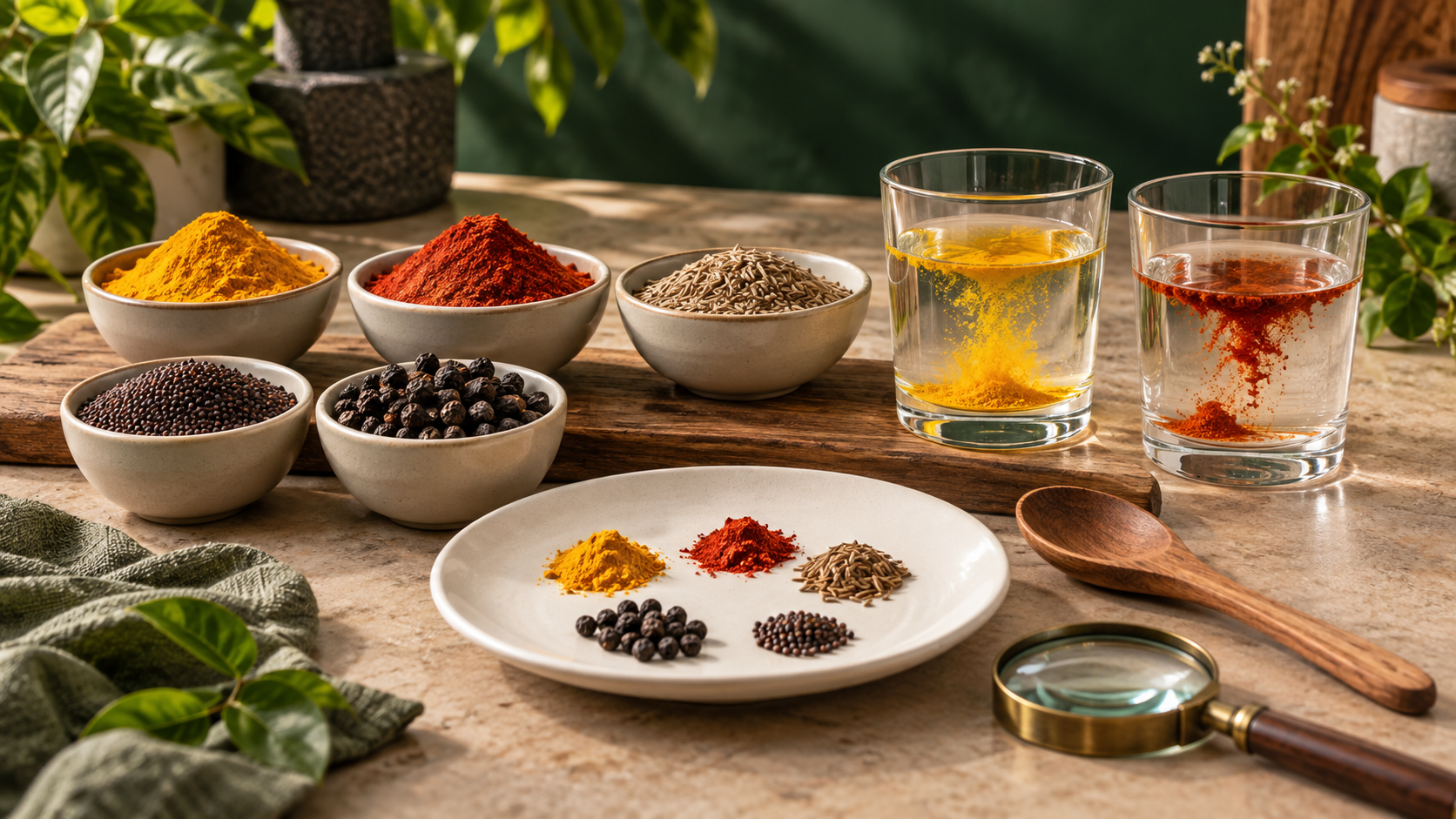
Use whole cumin for tadka, rice and slow infusions. Use cumin powder when you want its earthy warmth spread evenly through a gravy, chaat blend or seasoning. For the liveliest aroma, toast lightly and grind only what you need.
Coriander
Whole coriander seeds give a gentle citrus warmth when crushed or infused. Ground coriander adds body and a rounded flavour to curries and blends. Because the powder is used generously, smaller and fresher purchases often make more sense than an oversized pack.
Black pepper
Whole peppercorns are ideal for storage, pickling, broths and mills. Freshly cracked pepper is brighter and more dimensional than powder that has been open for months. Pre-ground pepper still works well where uniform, quick coverage matters.
Turmeric
Dried turmeric fingers store well but require suitable grinding equipment. For most households, a dependable turmeric powder is far more practical. Here, colour alone should never be the deciding factor; origin, processing, labelling and appropriate quality checks matter more.
Red chilli
Whole dried chillies let a cook choose whether to temper, toast, soak or grind. Chilli powder is efficient when consistent heat and colour are needed across a batch. The right variety and stated pungency matter just as much as the form.
What shelf-life numbers really mean
Shelf life is often quoted as if every spice follows one clock. It does not. Variety, harvest quality, moisture, grind size, oxygen exposure, packaging and storage temperature all influence how long a spice stays at its best.
As a broad home-storage reference, extension guidance commonly places whole spices around one to two years and ground spices around six months for best quality when stored properly. These are not universal expiry dates. Always follow the product label, and judge aroma, colour, moisture, infestation and condition of the pack.
A faded spice is not automatically unsafe; it may simply have lost the flavour you bought it for. Any sign of mould, insects, dampness, musty odour or damaged packaging is a different matter and should be taken seriously.
Store both forms with the same discipline
Keep containers airtight. Oxygen and humidity are the quiet enemies of aroma.
Choose a cool, dark cupboard. The shelf above the stove is convenient but usually too warm.
Keep steam out. Shake spice into a spoon instead of holding the jar over a boiling pan.
Buy for your real usage. A smaller pack finished while fresh is often better value than bulk stock that sits open.
Mark the opening date. This simple habit makes stock rotation much easier.
Do not top up an old jar. Empty, clean and dry it before adding a new batch.
For more detailed storage guidance, the USDA-developed FoodKeeper resource helps consumers think about freshness and quality, while Utah State University’s guidance explains why the plant oils responsible for spice character need protection from oxygen and moisture.
For commercial buyers, form follows the finished product
A retail kitchen can grind a spoonful on demand. A manufacturer, food-service buyer or distributor has a different decision to make. The right form must suit the process, equipment, batch size, destination and expected storage period.
Whole spice may be preferred when the buyer will clean, roast, mill or blend in-house. Ground spice may be the better fit when a defined mesh size, rapid dispersion and repeatable dosing are essential. In both cases, the conversation should include the agreed grade, cleanliness, moisture, aroma, packing format and any relevant laboratory parameters—not just the lowest price per kilogram.
Our view from Unjha
Sai Agro is rooted in Unjha, where cumin, fennel, coriander and other seed spices move through the market in many varieties and grades. Being close to the source teaches a simple lesson: the form is only one part of quality.
A good whole spice still needs careful lot selection and preparation. A good powder still depends on the raw material that entered the mill. That is why we begin with the buyer’s requirement—product, grade, quantity, pack and destination—then coordinate the appropriate supply direction with clear communication.
For some buyers, the answer will be whole spice with room to roast and grind. For others, it will be a carefully specified powder ready for formulation. The best choice is the one that protects the crop’s natural character while working properly in the buyer’s hands.
The practical answer
Keep whole spices when you value slow release, fresh grinding and longer aroma retention. Choose ground spices when speed, even distribution and repeatable dosing matter more. Most good kitchens—and most serious spice businesses—need both.
Planning a bulk requirement? Talk to Sai Agro about the spice, form, grade, quantity, packaging and destination you need.
- #whole spices
- #ground spices
- #spice shelf life
- #flavour
- #storage
- #spice sourcing